
Big Data Analytics Workshop
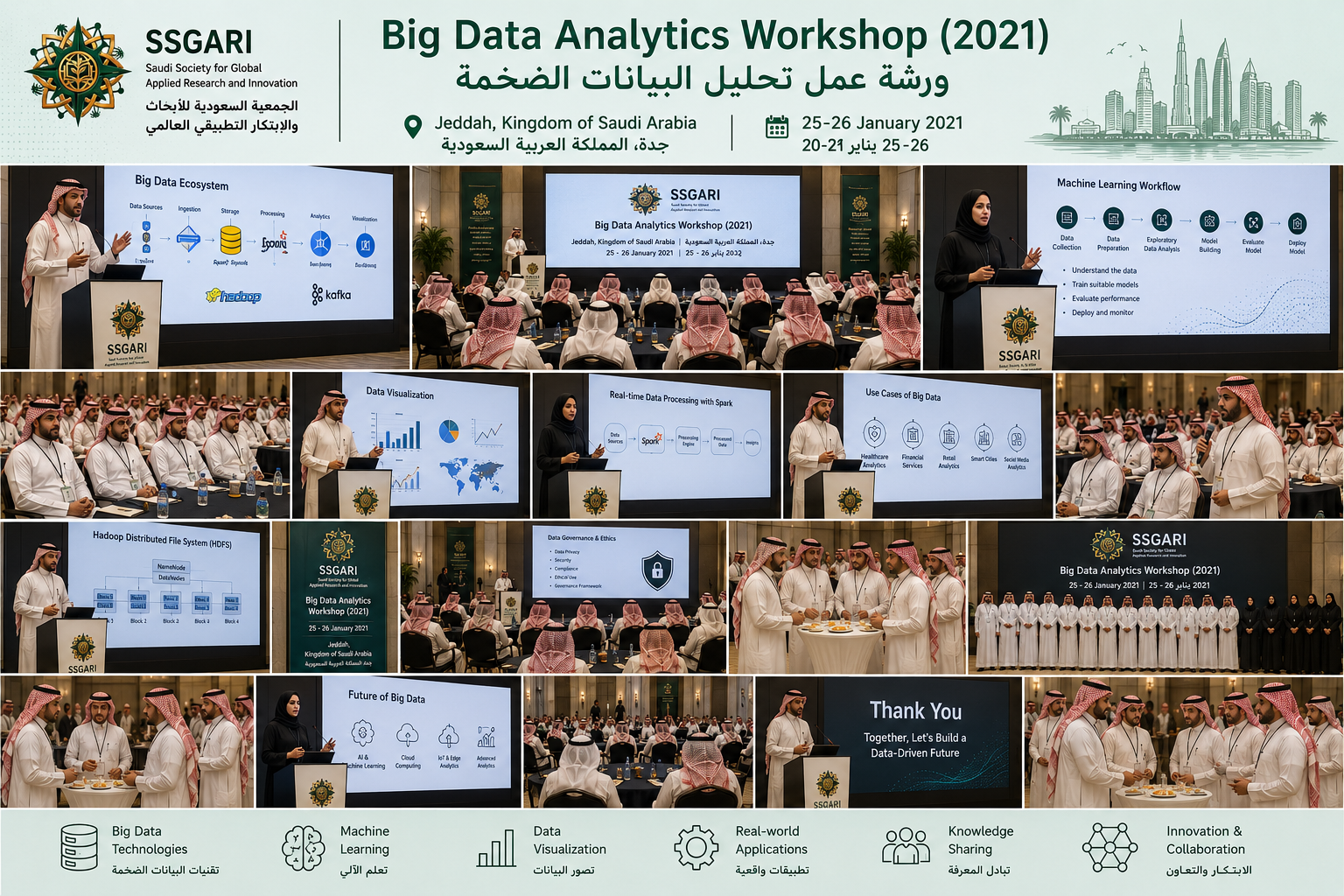
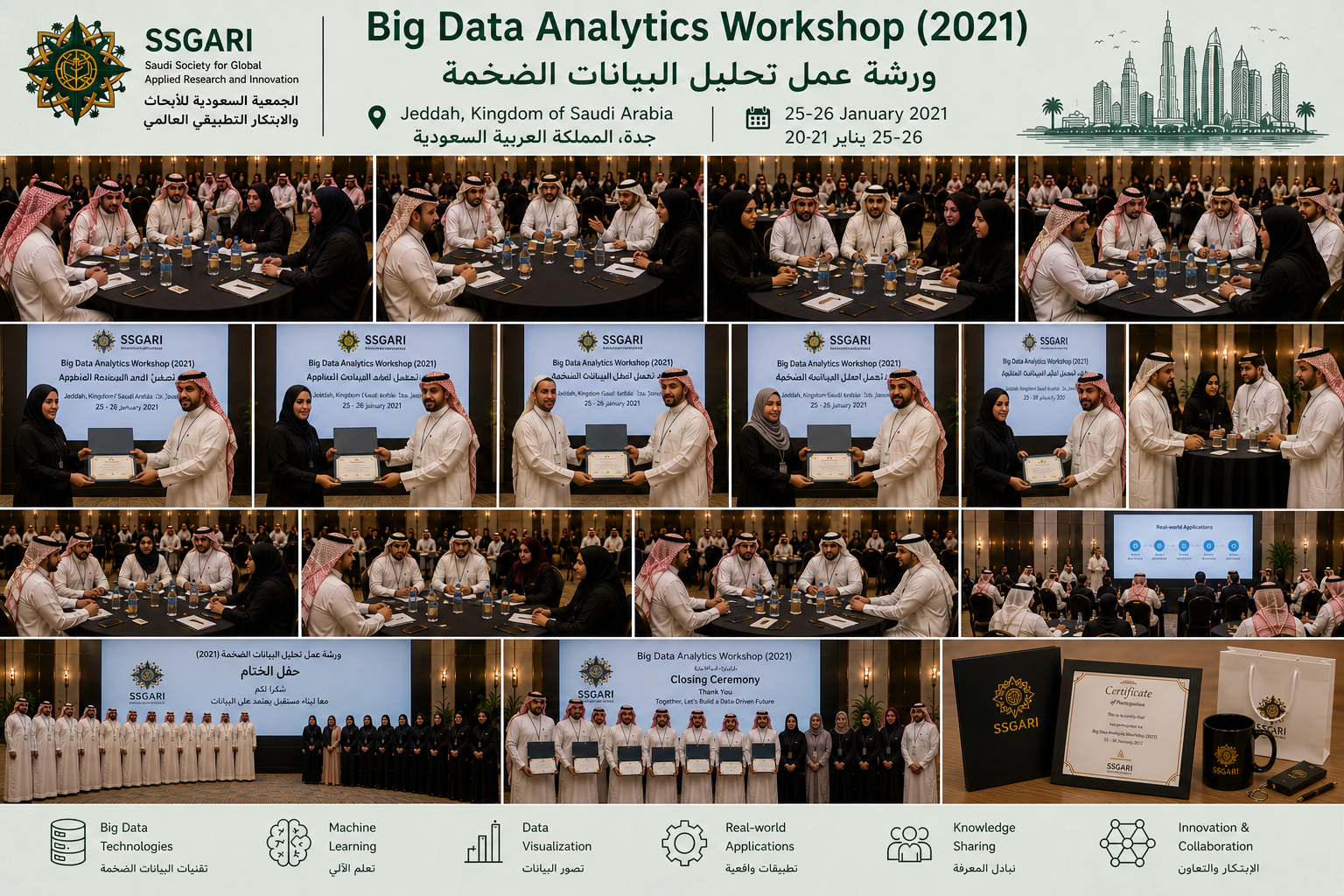
The Big Data Analytics Workshop, organized by the Saudi Society for Global Applied Research and Innovation (SSGARI), was successfully held in Jeddah, Kingdom of Saudi Arabia, in 2021. This comprehensive workshop attracted a wide spectrum of participants, including university faculty, postgraduate researchers, IT professionals, and data enthusiasts who were eager to strengthen their capabilities in data-driven technologies. The event was led by distinguished experts including Dr. Ahmed Al-Harbi, Dr. Sara Al-Qahtani, and Eng. Khalid Al-Mutairi, who brought extensive academic and industry experience to the sessions. Their collective expertise ensured a well-rounded program that addressed both foundational concepts and advanced applications of big data analytics.
The workshop began with an in-depth introduction to the architecture of big data systems, including distributed storage models and parallel computing frameworks. Participants were guided through the evolution of data analytics, from traditional databases to modern big data platforms capable of processing vast and complex datasets in real time. The instructors elaborated on key technologies such as Hadoop ecosystems, Spark-based processing, and cloud-enabled data solutions, providing attendees with a clear understanding of how these tools are implemented in large-scale environments. Emphasis was placed on building scalable and efficient data pipelines, ensuring reliability, and optimizing performance in enterprise settings.
As the sessions progressed, the focus shifted toward advanced analytical techniques and their practical applications. Detailed modules on predictive analytics and machine learning demonstrated how algorithms can be used to uncover patterns, forecast trends, and support strategic decision-making. Through guided exercises, participants explored classification models, regression analysis, and clustering methods, gaining hands-on experience in applying these techniques to real-world datasets. The instructors also highlighted the importance of data preprocessing, feature engineering, and model evaluation, ensuring that participants developed a strong methodological approach to analytics.
A significant portion of the workshop was dedicated to data visualization and storytelling, enabling participants to effectively communicate insights derived from data. The speakers demonstrated how visualization tools can transform complex analytical outputs into clear, actionable information for stakeholders. Case studies from industries such as healthcare, finance, and urban planning illustrated how organizations leverage dashboards and visual analytics to improve operational efficiency and drive innovation. Participants actively engaged in creating their own visual reports, reinforcing the practical nature of the training.
In addition to technical learning, the workshop fostered an interactive and collaborative environment where participants could exchange ideas and experiences. Panel discussions led by the guest experts addressed emerging topics such as artificial intelligence integration, data ethics, governance frameworks, and privacy challenges in the era of big data. These discussions encouraged critical thinking about the responsible use of data and highlighted the importance of regulatory compliance and ethical standards. Attendees benefited from open dialogue with the speakers, gaining valuable perspectives on both current challenges and future opportunities in the field.
The event concluded with a forward-looking session that emphasized continuous professional development and innovation in big data analytics. Participants were encouraged to pursue further research, certifications, and collaborative projects to enhance their expertise. The workshop not only strengthened technical competencies but also built meaningful connections between academia and industry professionals. Overall, the event reinforced SSGARI’s commitment to advancing applied research, promoting knowledge sharing, and empowering individuals to contribute effectively to the evolving data-driven landscape.